
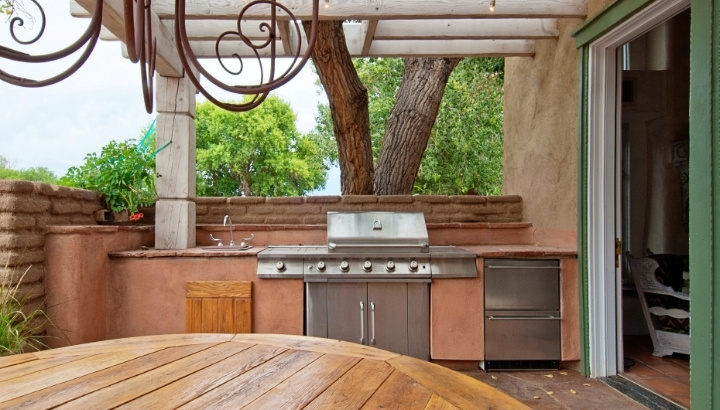
Most outdoor kitchen plans start with the fun part. There is a napkin sketch of an L-shaped island and a debate about pizza ovens, long before anyone checks where the gas line will run. The questions that decide the project sit in duller places: the property line, the soil, the fire code, and how you actually cook.
Good planning follows a simple order. Settle location, utilities, climate, and workflow first, then choose appliances that fit those answers. Homeowners who reverse that order often pay twice, once for the island and again for the trenching, permits, or rework that follows.
Where Can Your Outdoor Kitchen Legally Sit?
View this post on Instagram
Start with the lot, because the lot has opinions. Most municipalities enforce setbacks that keep permanent structures a minimum distance from property lines, and utility easements can rule out a strip of yard you assumed was yours to build on. Homeowners associations add another layer, with rules on materials, height, and visibility from the street.
A permit office will usually want a drawing showing the house, the proposed structure, and the distances to the property lines. If you have nothing accurate on file, site plans from Get a Site Plan or a local surveyor give the building department something precise to review. A clear drawing also exposes conflicts early, like a septic field right where the island was supposed to go.
Fire Separation Rules Depend on Your Housing Type
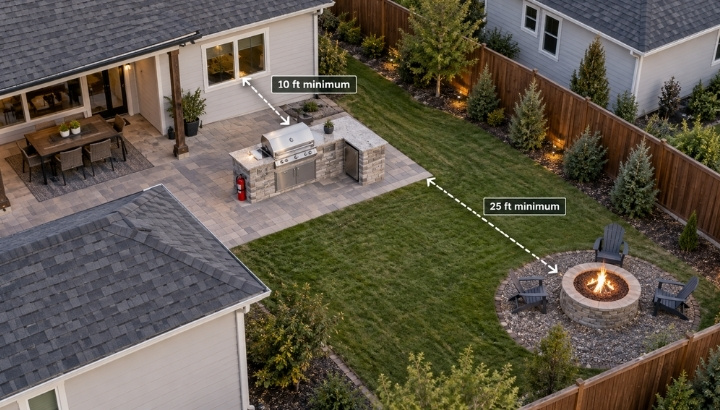
Fire codes are where neighboring cities can differ the most. The International Fire Code bars charcoal burners and other open-flame cooking devices from combustible balconies and from within 10 feet of combustible construction, and an information bulletin from the City of Charleston in South Carolina walks residents through that rule.
The same code section exempts one- and two-family dwellings, which means a detached house and a condo on the same street can face very different limits.
Charleston goes further for one particular cooking style. Its city code allows pit fires for cooking food only when they stay 25 feet from any structure or combustible material, with a fire extinguisher or similar equipment ready nearby. If you own a townhouse or a unit in a multifamily building, call the local fire marshal before buying anything with a flame.
What Is Running Under Your Patio?
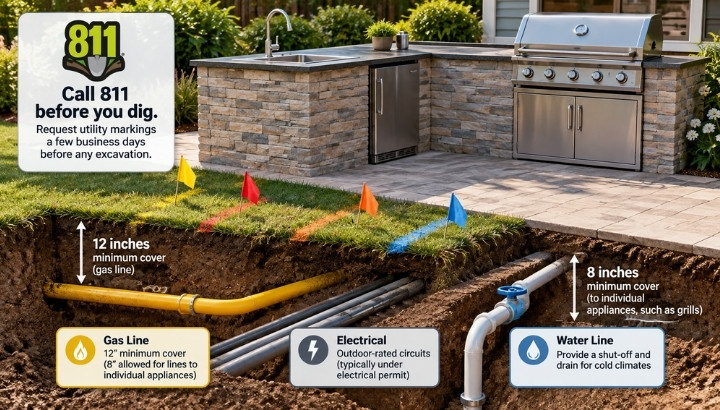
Every outdoor kitchen with a sink, a refrigerator, or a gas burner needs a trench somewhere. Before a shovel touches dirt, the Common Ground Alliance, which runs the national 811 program, asks homeowners to request utility markings a few business days ahead. Its figures show that skipping the call is the top cause of damage to buried utilities, and shovels rank second only to backhoes among the tools involved.
Gas lines bring their own depth rules.
According to an International Code Council summary of the fuel gas codes, underground gas piping generally needs at least 12 inches of cover, while lines feeding individual outdoor appliances such as grills may sit at 8 inches when the installation is approved and protected from damage.
Local amendments can raise those numbers, so the permit office has the final word.
Power and water deserve the same attention. Refrigerators and lighting need outdoor-rated circuits, usually under an electrical permit. In cold climates every water line also needs a way to be shut off and drained before the first hard freeze.
Frost Depth Is the Regional Wild Card
State rules spread widest underground. Minnesota Rules set a minimum footing depth of five feet in the state’s northern Zone I counties and three and a half feet in Zone II, which includes Hennepin and Ramsey counties, unless a soil engineer documents a shallower option. In warm southern states the frost line is far shallower, so foundation work for the same island can look completely different a thousand miles away.
The stakes are practical. A heavy stone-clad island that shifts with frost heave will crack countertops and stress gas connections within a few winters. Ask your building department which foundation it expects before you pour anything, and get the answer in writing if the inspector suggests an alternative.
How Much Counter Space Does Real Cooking Need?
Counter space is the planning question people answer by eye, and it is usually the one they regret. A grill needs landing room on both sides for raw platters, finished food, sauces, and tools, and a sink needs a prep surface beside it that isn’t also the serving buffet. If you are stuck on ideas, here is one sample.
Then picture a real Saturday evening. Who stands where and where guests lean while you cook shape the layout more than the appliance list does. Once the zones work, a guide to outdoor kitchen decoration helps with lighting and seating.
| Planning question | What often gets skipped | What it affects |
|---|---|---|
| Where can it legally sit? | Setbacks, easements, HOA rules | Permit approval and placement |
| How close is the flame to the house? | Fire code limits for condos and townhouses | Whether the grill can be used at all |
| What is buried in the yard? | 811 utility markings | Safety and repair liability |
| How deep does the foundation go? | Local frost depth | Cracked counters and shifting islands |
| Where does water drain? | Sink drain and roof runoff | Puddles, stains, and winter damage |
| How do you cook? | Landing space beside each appliance | Daily comfort and workflow |
Weather, Smoke, and the Long Game
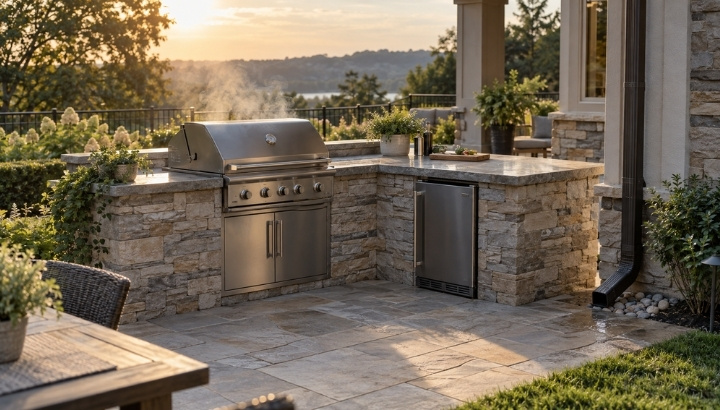
Climate shapes an outdoor kitchen long after the first cookout. Afternoon sun can turn a west-facing counter into a griddle, and a steady breeze can push smoke through an open patio door. Spend a few evenings on the spot before committing.
Water causes quieter damage. Roof runoff that spills onto a stone counter or pools around a cabinet base will stain, rot, or corrode whatever it touches. It pays to clean downspouts regularly and grade the patio so water moves away from the island.
Fire safety belongs on the maintenance list as well.
The NFPA reports that U.S. fire departments responded to an annual average of 12,141 home fires involving grills, hibachis, or barbecues between 2020 and 2024.
Its data also points to grills that had not been cleaned as the leading contributing factor, behind roughly one in five of those fires.
Materials live a harder life outdoors. Salt air near the coast can spot good stainless steel, and handling rust stains early keeps small marks from becoming permanent. Outdoor refrigerators also work overtime in summer heat, so leave them breathing room in the cabinet.
Will an Outdoor Kitchen Pay Off When You Sell?
Resale is a fair question, and the answer is mixed. The National Association of Realtors estimated in its Remodeling Impact Report: Outdoor Features that an outdoor kitchen could recover 100 percent of its cost at sale, and owners gave the project a Joy Score of 9 out of 10.
The same research found that only 1 percent of Realtors recommended adding one before listing a home, which suggests the payoff comes mostly from living with it.
Here are a few tips for selling your house.
FAQ
Final Thoughts
A great outdoor kitchen is mostly invisible planning. Property lines, buried lines, frost lines, and fire rules decide what is possible, and the cooking zones decide whether the space feels easy to use. Settle those first, add the new setup to your annual maintenance plan, and the grill you pick at the end will have a home that works for years.